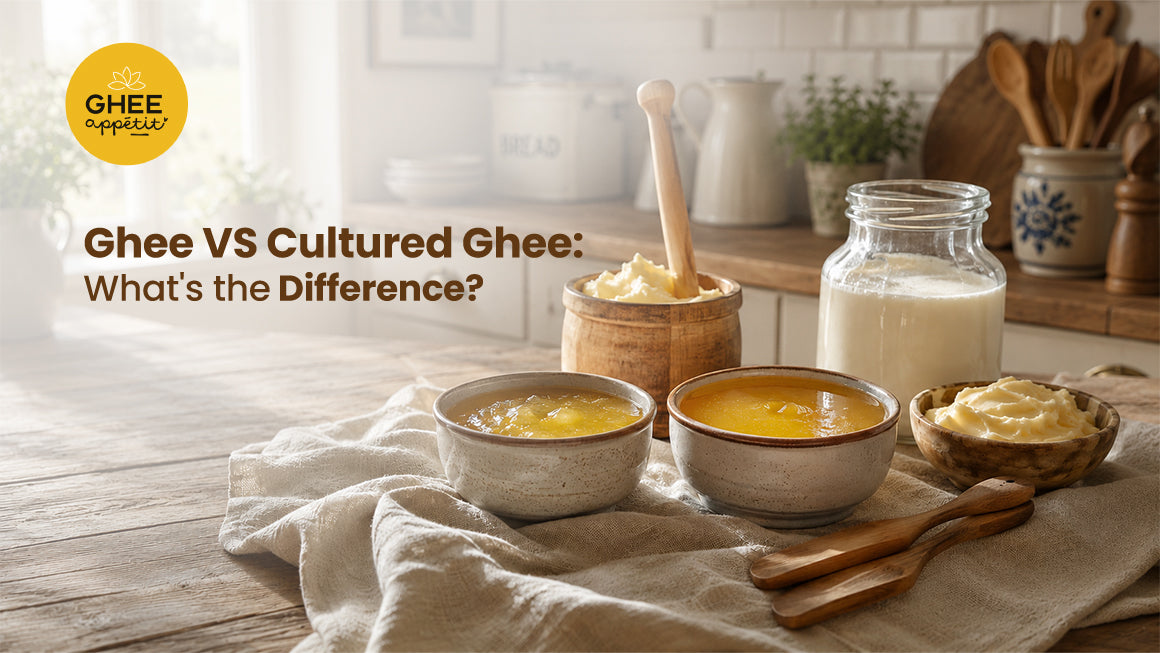
Ghee and cultured ghee often sit side by side on the shelf, yet the process behind making each sets them apart long before either reaches the pan. This blog looks at how the two are produced, where their flavours and aromas diverge and what that difference actually means once you start cooking with them.
Cultured ghee is made from cream that has been fermented before churning, which gives it a deeper, tangier flavour than regular ghee. Regular ghee skips that step and relies on fresh cream instead, which produces a milder, more straightforward taste. Beyond the fermentation itself, the two also differ in aroma and in how they behave once they are used in cooking.
Ghee has grown steadily more familiar in kitchens across the UK, whether picked up from a specialist grocer or found among the ghee for sale listed online. Look closely at where it is sold and two versions often appear side by side: regular ghee and cultured ghee. In the jar, they can look almost identical and the aroma is not drastically different upon first opening either. The real distinction lies further back, in how each one is actually made and that difference shows itself once cooking begins. This article sets out what cultured ghee is, how its production compares with regular ghee and where the two part ways in flavour and aroma.
Cultured ghee begins as fermented cream rather than the fresh cream used for regular ghee. Before churning, the cream is soured with lactic bacteria in a process similar to how yoghurt or crème fraîche is made and this fermentation stage is what gives cultured ghee both its name and its distinct character. In India, this style is often referred to as ‘Desi Ghee’ and it is usually what shoppers mean when searching for the best Desi Ghee in the UK, though it is more commonly described here through the fermentation process itself. Once the cream has fermented for a set period, it is churned into cultured butter and then simmered down into ghee in the usual way. Because the bacteria do their work early on, everything that follows builds on that tangy base, shaping the flavour long before the ghee is finished.
Regular ghee skips fermentation altogether. Fresh cream or butter is heated slowly so the water content evaporates while the milk solids separate from the pure butterfat. Once those solids turn golden and settle at the bottom of the pan, the liquid is strained off, leaving clarified butter with a clean, nutty finish. The method has changed very little over the years, largely because there is not much to improve on. Its appeal lies in that consistency, a straightforward process that produces a dependable result each time.
Cultured ghee on the other hand, takes a longer route to the same end point. The cream is soured first, developing lactic acid and a sharper taste before it ever reaches the pan. Some producers describe this stage as ‘hand paddled’, a reference to the slow, manual churning used to separate the fermented cream into butter. That butter is then simmered gently until the milk solids caramelise slightly and the water cooks away, much as it does when making regular ghee. The real difference is established at the very start of the process rather than at the end, which means that even though both methods finish with the same clarifying step, cultured ghee retains that fermented character all the way through.
This is where the two versions really separate themselves. Regular ghee tends to carry a clean, buttery aroma with a mild, nutty sweetness, which makes it useful in dishes where the ghee is meant to support other flavours rather than dominate them. It works well for everyday cooking such as roast potatoes, a full English breakfast, or simply spread over warm toast. Cultured ghee, in contrast, carries a tangier and more pronounced depth as a result of that early fermentation. Some describe the taste as faintly cheesy, while others compare it to browned butter with a slightly sour edge. This makes it a good match for richer, spice-led dishes such as curries, dals, or a homemade pilau rice where the extra depth has something to work with. The buttery aroma remains present in both, but cultured ghee adds an extra layer of complexity that lingers a little longer on the palate. Cultured ghee is likely to be your choice if you like bold, layered dishes and regular ghee is usually the choice for neutral cooking fat.
The right choice really depends on what is being cooked. Regular ghee is good as an everyday cooking fat, as it allows the natural flavour of the other ingredients to come through without competition. Cultured ghee suits dishes built around a stronger, more traditional preparation, such as slow-cooked curries or roasted vegetables, where a deeper, fermented note adds something worthwhile. Neither version is inherently better than the other; they are simply suited to different purposes in the kitchen, which is why many cooks keep both close at hand, often sourcing from the same ghee suppliers rather than switching between brands.
Ghee vs cultured ghee ultimately comes down to purpose rather than preference. Regular ghee offers a clean, dependable cooking fat, while cultured ghee brings fermentation and added depth to whatever it is used in. Understanding how each is made, from fresh cream through to fermented cream, makes the difference in flavour much easier to appreciate. For anyone curious to compare the two directly, it is worth checking the price of ghee across the range to see which one earns a permanent place in the kitchen.
Two Brothers Organic Farms. Cultured Ghee vs Non-cultured Ghee - Know The Difference! [Internet]. [Accessed August 2026]. Available from: https://twobrothersindiashop.com/blogs/informative/cultured-ghee-vs-non-cultured-ghee
National Center for Biotechnology Information. [Article available on PubMed Central] [Internet]. [Accessed August 2026]. Available from: https://pmc.ncbi.nlm.nih.gov/articles/PMC8021505/
Great British Chefs. Butter Guide: Different Types of Butter [Internet]. [Accessed August 2026]. Available from: https://www.greatbritishchefs.com/features/butter-guide-different-types
This article is intended for general informational purposes only and focuses on the production methods and flavour characteristics of ghee. It does not constitute health, medical or nutritional advice. Please consult a qualified professional for guidance specific to your circumstances.