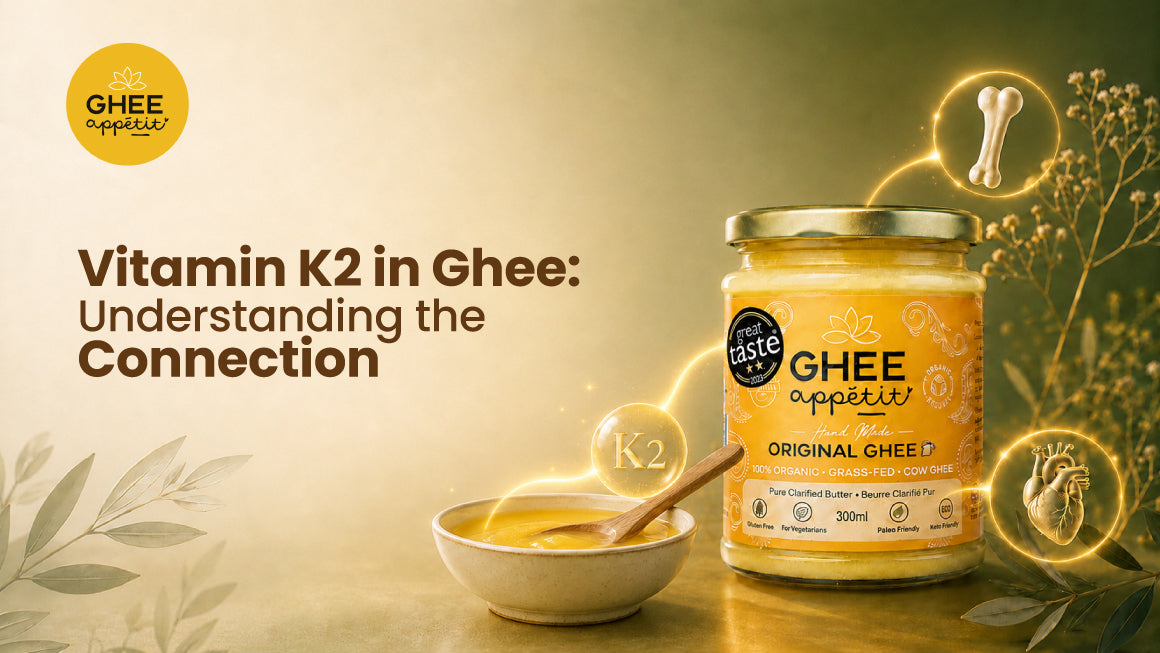
Vitamin K2 has become one of those nutrients food lovers keep hearing about, often mentioned in the same breath as dairy fats like butter and ghee. This blog looks at what vitamin K2 actually is, how it relates to dairy fat more broadly and what current research says about its presence in ghee, particularly the grass-fed kind.
Vitamin K2 is a fat-soluble vitamin most closely associated with animal-based and fermented foods and dairy fat is one of the sources most often discussed in nutrition research. This article explains what vitamin K2 is, how it connects to dairy fat generally and what the evidence says about vitamin K2 in ghee, with a particular look at how grass-fed ghee compares. It also considers where ghee sits within traditional food culture more broadly.
Ghee has always had a reputation as more than just a cooking fat, tied closely to tradition, flavour and, more recently, to conversations around nutrition. One nutrient that comes up often in these conversations is vitamin K2, a compound linked to dairy fat that has attracted growing interest from researchers and home cooks alike. Anyone browsing ghee online may have come across the term, often in discussions about grass-fed dairy and traditional diets. So what is vitamin K2 actually and how does it relate to ghee? This article looks at the science behind vitamin K2, its association with dairy fat and what current research says about ghee, particularly the grass-fed variety.
There are two types of vitamin K. One is Vitamin K1 and the other is Vitamin K2. Both of these vitamins are called fat soluble vitamins because they are absorbed with dietary fat not water. You’ll find vitamin K1 mostly in green leafy vegetables and vitamin K2 in animal products and fermented foods. Vitamin K2 is produced either by bacteria (fermentation) or by animals (from the vitamin K1 in their food). Vitamin K is a well-known nutrient. Research has explored a range of areas related to vitamin K2 and the scientific evidence continues to develop. Because it is fat-soluble, vitamin K2 tends to be found in foods that contain a reasonable amount of fat, which is part of why it comes up so often alongside dairy.
Vitamin K2's role in the body centres on activating certain proteins that depend on the vitamin to function properly. Two of these come up often in nutritional science: one involved in normal blood clotting, and another called osteocalcin, which is involved in binding calcium within bone tissue. When vitamin K2 activates these proteins, it is effectively switching them on so they can carry out their intended function. This activation process is generally described as vitamin K2's core biological role, and it is part of the reason the vitamin sits in the fat-soluble category alongside vitamins A, D and E, all of which are involved in similarly specific processes within the body.
Vitamin K2 is generally considered relevant within nutritional science because the processes it supports, including normal blood clotting and calcium regulation within bone tissue, are recognised as necessary for the body to function as expected. The body can convert some vitamin K1 into vitamin K2, though this conversion is limited, which is one reason researchers have taken an interest in direct dietary sources of vitamin K2, including animal-based and fermented foods such as dairy fat. Some nutrition research has also looked at whether dietary patterns lower in vitamin K2 might affect these processes over time, though this remains an area of ongoing study rather than settled science. As with any specific dietary requirement, anyone with particular health considerations is best placed discussing their individual needs with a qualified professional.
Dairy fat has become one of the more widely studied sources of vitamin K2 in nutrition research, largely because of how the vitamin ends up there in the first place. When grass-fed cows graze on fresh grass, they consume vitamin K1 and through their own digestive processes, some of this is converted into vitamin K2, specifically a form known as MK-4, which is then stored in the animal's fat tissue and, in turn, in the milk fat itself. This is why studies looking at vitamin K2 content in dairy tend to compare grass-fed and grain-fed sources, since the animal's diet plays a direct role in how much of the vitamin ends up in butter, cheese or milk fat generally. Butter, in particular, has featured in several studies as a relevant source, given how concentrated its milk fat is compared to fresh milk or cream.
If you're considering adding ghee to your kitchen, you'll find a wide range of ghee listed for sale on our website, with options to suit different tastes and cooking preferences.
One question that often comes up is: “Does Ghee Contain Vitamin K2”? Since ghee is essentially clarified butter, with the water and milk solids removed through the clarification process, it carries the same underlying fat as butter itself and research on ghee's composition backs this up. A published review of ghee's nutritional profile has noted that ghee contains several fat-soluble vitamins, including vitamin A, vitamin D, vitamin E and vitamin K, alongside phospholipids. That means vitamin K, in one form or another, is generally present as part of ghee's overall composition, much as it is in butter. Exact levels can vary considerably depending on factors such as the animal's diet, the season and how the ghee itself is made, so it is difficult to state a single, fixed figure that applies to all ghee. What research does support is the general presence of vitamin K within the fat itself, rather than any specific claim about how much a given batch might contain.
Grass-fed ghee tends to come up specifically in these discussions and there is a fairly intuitive explanation for that. Since vitamin K2 largely depends on the animal's access to fresh grass, ghee made from the milk fat of grass-fed cows is generally considered, in nutrition literature and wider discussion, to have the potential for a higher vitamin K2 content compared to ghee made from grain-fed sources. This lines up with wider research on dairy fat, which has repeatedly pointed to pasture access as one of the more significant factors affecting vitamin K2 levels. It is worth noting, though, that this is a variable relationship rather than a guaranteed one. Factors such as the breed of cow, the composition of the pasture and the time of year can all influence how much vitamin K2 ends up in the final product, which is why grass-fed labelling on its own does not tell the whole story.
Long before vitamin K2 had a name, ghee held a firm place in traditional food culture, particularly across South Asia, where it has been made and used for generations. Traditional preparation methods, passed down through households rather than written into fixed recipes, treated ghee as a staple fat for cooking, a preservation method and, in many households, something closely tied to ritual and daily life. This cultural significance existed independently of any modern nutritional interest and it continues to shape how ghee is understood today, even as scientific attention increasingly turns to specific nutrients like vitamin K2. The appeal of traditional ghee lies as much in its history and versatility in the kitchen as in any specific nutrient it might contain.
Nutrition science is still investigating vitamin K2. Its link with dairy fat and even ghee is one example of the larger discussion that is going on regarding the effect of what animals eat on the food we consume. What the evidence currently supports is that ghee, as a dairy fat product, generally contains some vitamin K alongside other fat-soluble vitamins, with grass-fed sources often associated with higher levels in the wider research. Anyone with specific dietary needs or health considerations is best placed speaking with a qualified professional, since individual requirements vary considerably. For those simply curious to explore quality ghee, whether from trusted ghee suppliers or searching for the best Desi Ghee in the UK, it is worth checking the price of ghee across the range to find what suits your kitchen.
PubMed. From tradition to science: Possible mechanisms of ghee in supporting bone and joint health [Internet]. [Accessed August 2026]. Available from: https://pubmed.ncbi.nlm.nih.gov/39313022/. (PubMed)
Dr. Marianne Teitelbaum. How Important is Vitamin K2? [Internet]. [Accessed August 2026]. Available from: https://drmteitelbaum.com/vitamin-k2/. (drmteitelbaum.com)
This article is intended for general informational purposes only and focuses on the nutritional science and traditional background associated with ghee and vitamin K2. It does not constitute health, medical or nutritional advice. Please consult a qualified professional for guidance specific to your circumstances.