


Cooking With Ghee: How to Replace Vegetable Oil, Butter and Lard in Your Kitchen
Short Summary
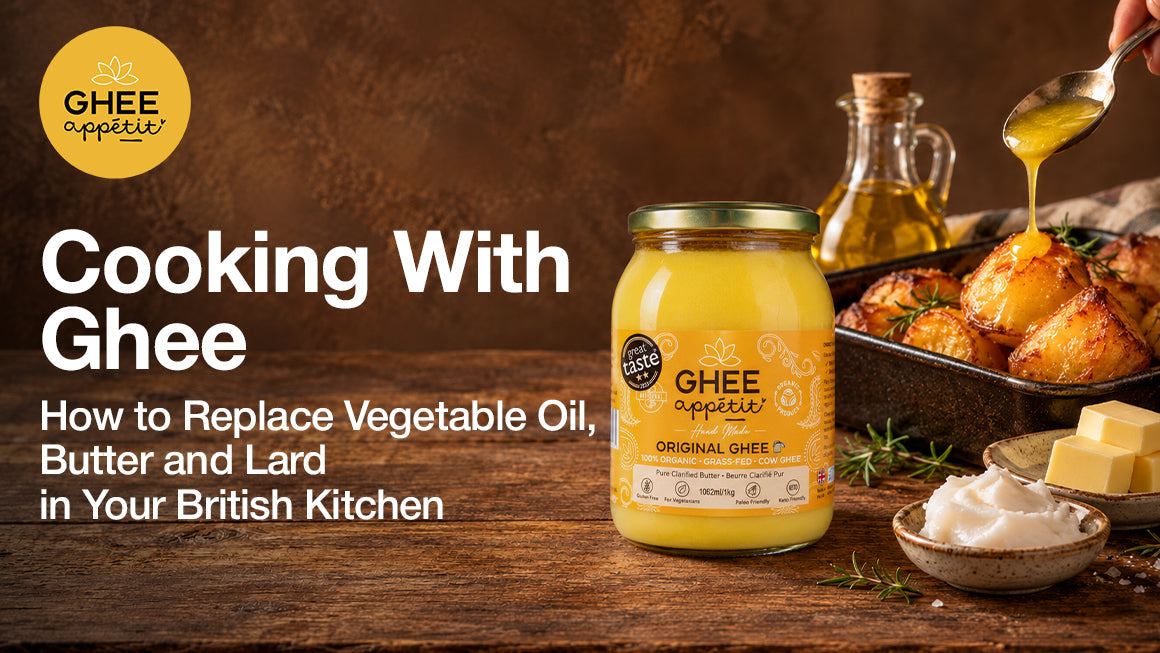
Cooking with ghee provides a rich, buttery flavour to roast potatoes, vegetables, and curries. For frying and roasting, use melted ghee in a similar amount.
If you are buying pure ghee in the UK, check the ingredient list and storage instructions. Use it moderately along with oils.
Introduction
Ghee adds an excellent nutty taste to our everyday food items like roasted potatoes and fried mushrooms.
The reason why ghee is preferred over regular butter is due to its heat resistance.
What Ghee Actually Is — And Why It Behaves Differently in the Pan
Ghee is a type of clarified butter. The production of ghee includes heating butter and removal of the majority of water and milk solids with preservation of predominantly butterfat.
The cooking method is responsible for the distinctive golden colour and nutty flavour of ghee. Thanks to its low content of water and milk fat, ghee acts differently in hot cooking pans than butter.
Ghee is prepared from milk products. Despite the low lactose content, ghee can contain milk proteins, such as casein. Therefore, it should not be regarded as suitable for people with milk allergy.
Smoke Point: The Real Reason Ghee Handles Heat Better Than Butter
Ghee smoke point is higher than that of ordinary butter because the majority of milk fat that can burn in a hot pan is removed. The temperature varies depending on the product and preparation; therefore, it is necessary to check the manufacturer's recommendation.
That makes ghee useful for high-heat cooking, including roasting and shallow frying. However, a higher smoke point does not mean it is possible to leave ghee in the hot pan and ignore it – any cooking fat can overheat and burn.
Kitchen tip: Heat the pan slowly, put ghee in it and turn up the heat. If ghee starts to smoke, remove the pan from the heat and let it cool.
The Swap Chart: Ghee Conversion Ratios That Work
| Fat in your recipe | Starting amount of ghee | Best use |
|---|---|---|
| Vegetable, rapeseed or sunflower oil | 1 tbsp melted ghee for 1 tbsp oil | Roasting and frying |
| Butter for pan cooking | Start with a slightly smaller amount | Eggs, mushrooms and vegetables |
| Butter in a melted-fat bake | About 80–85g ghee for 100g butter | Some cakes and biscuits; adjust moisture if needed |
| Lard, beef dripping or goose fat | 1 tbsp melted ghee for 1 tbsp fat | Roast potatoes and savoury cooking |
| Olive oil | 1 tbsp melted ghee for 1 tbsp oil | Cooked dishes where a buttery flavour works |
These are approximate amounts that can be changed depending on the recipe. The differences in flavour, moisture, and texture between fats can require testing of a small portion of food when adapting the recipe.
Replacing Vegetable, Rapeseed and Sunflower oil
Using ghee instead of oil is appropriate for roasting vegetables or frying ingredients. Melt it first if you’re measuring by tablespoon, then use approximately the same amount.
The main difference is flavour – ghee has a richer taste than neutral oils. Comparing ghee vs vegetable oil, note that rapeseed and sunflower oils contain more unsaturated fat when compared to ghee.
Replacing Butter
As a ghee substitute for butter, you can use it to fry mushrooms and add to vegetables.
However, baking is different. Butter contains water, while ghee contains almost none. In case of a recipe with melted butter, use 80-85g of ghee per 100g of butter. The recipe may need a little bit more liquid, and the result may be different.
Replacing Lard, Dripping and Goose Fat
Ghee is a vegetarian option to make potatoes golden brown without the meaty taste of dripping or goose fat. Use a similar amount of the fat and coat potatoes lightly, leaving space between them in the tin.
Replacing Olive Oil
Ghee can be used in cooked dishes where its buttery flavour fits the ingredients.
Ghee in Cooking, Dish by Dish
The Sunday Roast
If you want to find the best fat for roast potatoes, ghee can be one of the options as it gives a buttery flavour to potatoes.
Parboil the potatoes, drain them well, rough up the edges, toss with melted ghee and roast until golden, turning the potatoes during cooking. Ghee can also be used for preparing Yorkshire pudding, though it will taste differently from traditional dripping.
The Full English
A little bit of ghee can be used to fry mushrooms, tomatoes or eggs. The richness of ghee is enough to complement the rest of the breakfast, so there is no need to use much of it.
Veg, Mash and Greens
Stir a little bit of ghee into hot mash, let it melt on carrots or use ghee to sauté cabbage and greens. Add some amount at a time, as the flavour is richer than it looks.
Curry Night
Ghee is particularly good for blooming spices. Heat a little bit of ghee, add cumin seeds or other whole spices and cook until the fragrance appears, and only after that add the rest of the ingredients.
In case of simple tempering, gently heat spices in ghee and pour it over the cooked dal.
Choosing the Right Use for Ghee
Use your usual fat in the following cases:
-
You need butter’s structure: Creamed cakes and laminated pastries depend on how butter behaves.
-
You want olive oil’s flavour: Dressings and dips benefit from its distinctive taste and liquid texture.
-
The meal needs to be vegan or dairy-free: Ghee is a milk product.
-
You’re reducing saturated fat: Unsaturated oils are generally the better everyday choice.
Storing Ghee Properly
Many unopened jars are shelf stable, but storage recommendations can vary. Follow the label, close the lid tightly and use a clean, dry spoon.
If the product has a bad smell, unusual appearance, or mold growing, discard it. Fat can become rancid over time; therefore, check the best-before date too.
Frequently Asked Questions
Can I use ghee instead of oil for frying?
Yes. Use roughly the same volume of melted ghee as the oil specified, and adjust to taste. Avoid heating it until it smokes.
Can I use ghee instead of butter in baking?
Sometimes you can do it, but it is easier to try it in recipes with melted butter. As ghee has less water content, the recipe may need more moisture.
Is ghee lactose free?
Some products may contain very little lactose, but you should check the label rather than assume every ghee is lactose-free. If you have a milk allergy, you shouldn’t use ghee as it may contain milk protein.
Can I use ghee for roast potatoes?
Yes, you can use it. Lightly coated potatoes with melted ghee have a rich flavour. Leave space between the potatoes so that they roast.
Bringing Ghee to the Table: Make Ghee Work for Your Everyday Cooking
Ghee finds its place, thanks to flavour and versatility. Try it with roast potatoes, vegetables or spices using the swap chart.
For everyday cooking, keep olive or rapeseed oil in your kitchen as well. Each has its own place; the choice depends on the dish.
Author Bio:
Vidushi Sharma is the founder of Ghee Appétit, a UK-based artisan ghee brand that is inspired by traditional family recipes and Ayurvedic cooking methods. She loves wholesome nutrition and authentic flavours and has created premium organic, grass-fed ghee for the modern kitchen.
Her journey marries generations of culinary expertise with a focus on high-quality, traditionally made clarified butter.
More Ghee Recipes

